

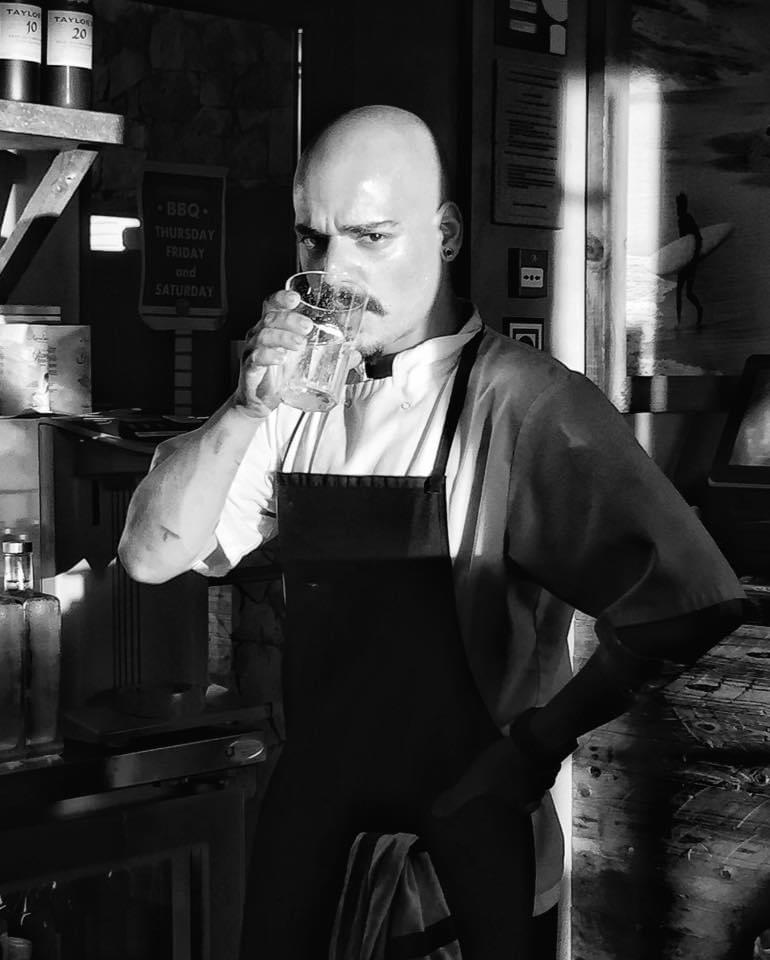
“Flavors of the World: Rui’s Global Approach to Modern Cuisine”
In a world where culinary trends evolve at lightning speed, some chefs stand out for their ability to balance tradition with innovation. Rui, a globally experienced private chef, brings a unique perspective to the table, blending time-honored techniques with modern creativity. From sustainable practices to his philosophy of food as a means of connection, Rui’s journey reveals the true essence of cooking as an art form and a way of life. In this exclusive Q&A, Rui shares his thoughts on everything from the challenges of maintaining authenticity in the future of the culinary industry.
CAREER
Q. Good morning, Rui, could you tell us about your beginnings and what led you to be a Chef? Please introduce yourself in a few lines.
“ I’m Chef Rui, born in 1991. My passion for flavors and creativity sparked my culinary journey early on. I trained formally, honed my skills, and immersed myself in diverse cuisines. Working with talented mentors and exploring new traditions has shaped my approach to the kitchen today.”
Q. Was there a specific moment or experience that inspired you to pursue a career in the culinary arts?
“ There wasn’t one specific moment, but many. I’ve always noticed that great food is a must for any memorable event. Food plays a central role in holidays and celebrations, and being the person who creates those experiences became my goal. As my career progressed, my passion only grew, and I knew this was the path I was meant to follow.”
Q. Working in 3-rosette-level restaurants is an impressive accomplishment. Can you share the most challenging kitchen environment you’ve experienced and the lessons it taught you?
“ I’ve even reached 4 rosettes, but who’s counting, right? The reality in fine dining kitchens is often tough: understaffed, high expectations, and a relentless work environment. If you’re not fully immersed in that intensive lifestyle, you’ll quickly be forced to adapt. The key lesson for me? Persistence. It’s cliché, but if you can push through challenges, stay out of your comfort zone, and keep going, that’s what defines a chef.”
Q. What inspired your decision to pursue private chef work rather than continuing in traditional restaurant settings?
“ After years of facing the same challenges, I decided it was time for a change. The first 9 years of my career were tough, long hours, constant stress, and proving myself double time. But I wanted to keep doing what I love while offering a tailored, unforgettable experience without the industry’s negative side. Working in open kitchens and interacting with guests made me realize I was missing a whole new aspect of service.”
Q. Can you describe what it was like to cook for the royal family in Saudi Arabia? Did you have any particularly memorable experiences?
“ Saudi Arabia was an eye-opener, politically, socially, and culturally. It was overwhelming, but I was lucky that the cuisine they were after was Italian and French, which I love and know well. The experience was memorable, from private planes to staying at the Fairmont in Geneva. The true highlight was the recognition of a royal family member, especially considering their high expectations. I’ll never forget seeing solid gold cutlery and enough designer handbags to buy a luxury sports car.”
Q: Can you walk us through a typical day in your life as a private chef?
“ My day starts early, reviewing the menu and prepping for the week. After a quick coffee and workout, I’m ready to face whatever comes my way. When a surprise party pops up, I quickly adjust the menu and quantities, staying flexible as always. By mid-afternoon, I’m in the kitchen early to prep for any last-minute changes and check in with the team. By 9:00 PM, everything’s set, and service runs smoothly. As the day winds down, I reflect, grab some takeout, and prepare for tomorrow, knowing the team will handle any curveballs.”
Q: Have you always been drawn to the idea of working on an international stage, Rui?
“ Absolutely! Born in Portugal and raised in Australia until I was twelve, I’ve always been curious about the world. My ancestors were explorers, so traveling feels natural to me. Meeting new cultures broadens your perspective, and food is at the heart of that connection. My love for travel and cooking made this path a natural fit; sharing who I am as a chef and an international person just makes sense.”
Q: Over the last 15 years, how has cooking impacted you as a person?
“ They say humility can’t be taught, but I challenge anyone to work in hospitality for a year, it’s a game changer. I quickly learned that every role in an operation matters, and when you lead with love and respect, it transforms the team. Working in kitchens has humbled me, instilling discipline that continues to shape me today.”
Q: What has been the biggest challenge of your career so far, and how did you overcome it?
“ My biggest challenge was believing in myself as a chef. I often felt like an imposter, surrounded by incredible talent, and unfairly compared myself to culinary greats. Once I overcame that mindset, my growth accelerated. The drive of “never being enough” pushed me to constantly strive for improvement, and that self-motivation became my biggest asset.”
Q: What has been your most memorable or rewarding experience as a private chef so far?
“ For me, the most rewarding experience has been gaining control over my off-time, and balancing the demands of such a tough career. While my interactions with high-profile guests have been limited, the ability to manage my time and live life on my terms is the true reward.”
CUISINE PHILOSOPHY
Q: We’d love to know if there’s a signature dish or style that you’re known for.
“ Most chefs would agree that there’s no single” signature dish,” but we each have our unique style. What defines me is taking local ingredients and reimagining them with innovative techniques and familiar flavor profiles. The endless combinations keep things exciting, and the reactions from guests usually tell me I’m on the right track.”
Q: With your focus on seasonal ingredients and harmonious flavors, is there a dish that truly represents your culinary philosophy?
“ My approach is all about adaptability: using what’s available, meeting my client’s needs, and maximizing what we have. If I had to choose a dish, it would be spaghetti bolognese, simple, flavorful, and loved by everyone. It’s a dish that can be elevated to new heights, with minimal waste, making it timeless and versatile.”
Q: What’s been your most memorable destination during your culinary travels, and how has travel affected your style in the kitchen?
“ Without a doubt, Scotland. The beauty of the countryside, the quality of the produce, and the demand for exceptional service were pivotal in shaping me as a chef. My first head chef had worked under Marco Pierre White and Gordon Ramsay, and his vision for cooking became my ultimate aspiration. That experience, combined with working with a sous chef who later became a head chef, truly allowed me to grow, as there was always room for learning and the techniques were exceptional.”
Q: Having worked in various parts of the world, you’ve likely encountered new ingredients and cooking methods. How have these experiences shaped your culinary approach?
“ When creating a dish, I consider every element, texture, flavor, appearance, and then look for ways to combine unexpected ingredients from different cultures. Working in diverse environments has taught me to bridge these influences and experiment with new ideas. Not every combination works, but through trial and error, I find the flavors that complement each other while respecting seasonality. “
Q: How do you adapt your culinary approach to cater to the specific preferences and expectations of high-profile clients?
“ High-profile clients know exactly what they want, which gives me a clear vision to exceed their expectations. I work with broad guidelines, then walk the client through my approach to ensure we’re aligned with the final product. It’s all about delivering a tailor-made experience. I always prioritize zero waste and flexibility, even if it means deviating from traditional methods to meet the client’s desires.”
Q: As more people seek plant-based and health-conscious options, how do you adapt your approach in the kitchen to accommodate these trends?
“ I’ve always worked in kitchens that cater to vegetarians and vegans, so it’s second nature for me. With experience, I’ve learned to let the ingredients shine, especially with cuisines like Indian, which offer bold flavors without compromising on plant-based options. Understanding the nutritional value of ingredients allows me to create flavorful, nutritious dishes, and even convert meat lovers.”
Q: How do you maintain creativity and innovation in your role as a private chef?
“ Balancing client expectations with creativity is key. I use my downtime to experiment with new flavors, techniques, and combinations, which I can later incorporate into my work. It’s about self-motivation, choosing to evolve and push boundaries rather than staying complacent.”
Q: Rui, do you feel that working as a private chef gives you more freedom to experiment with techniques compared to traditional restaurant kitchens?
“ It’s a balance. In a traditional kitchen, your creative input is often limited unless you’re in a top position, but you’re exposed to a wide range of techniques and flavor profiles. As a private chef, meeting the client’s needs comes first. While I try new things, I keep novelty to a minimum and rely on client feedback to guide my experiments.”
Q: In today’s world of sustainable food practices, how do you source your ingredients and minimize waste? Are your clients increasingly requesting dishes that align with these practices?
“ Clients often want what they want, but that doesn’t mean I compromise on sustainability. I was raised in kitchens that prioritized environmental consciousness, so minimizing waste is second nature. I find creative ways to repurpose leftovers, whether it’s compost, stock, sauces, or staff meals. Sustainability is a mindset I maintain in every dish I produce.”
Q: How do you stay excited about new trends in the culinary industry, and how do you incorporate them into your cooking?
“ I always explore trends and assess how they align with my style. It’s important to have a clear perspective on what fits and what doesn’t. I take what works and keep the rest for the right moment. Timing and context are key when introducing trends into my cooking.”
Q: Do modern techniques like sous-vide, or molecular gastronomy play a role in shaping your cooking style?
“ Sous-vide is invaluable, especially for large-scale services, like cooking proteins in advance for a 150+ cover service. In a restaurant or hotel setting, it’s essential for quality and efficiency. However, cooking from scratch is different, and having both modern and traditional techniques in my repertoire lets me know when to apply each. In the end, it’s about using the right method for the right situation.”
Q: In your cooking, how do you maintain the authenticity of traditional cuisines while also adapting them for a contemporary audience?
“ I firmly believe in the saying, “If it isn’t broken, why fix it?” Some things are timeless, and that’s what makes them great. However, I’ve had to adapt traditional dishes for modern audiences by refining elements and incorporating contemporary trends. While it’s challenging to recreate perfection, as chefs, we do it to push boundaries and make these classics accessible to everyone.”
VISION
Q: You’ve mentioned being inspired by the idea of bringing people together through food. Can you share a moment when you felt you truly achieved that?
“ I remember a moment at Six Senses in Portugal, where I had to teach a cooking class for a table of 14, much larger than what I was used to. I was nervous, but I was amazed to see guests from Portugal, the Netherlands, Italy, and France, who were initially quiet, and fully engaged with the food and what I was sharing about the ingredients and their heritage. Watching them exchange stories about similar dishes from their countries was a beautiful experience. Maybe the Douro wine helped!” (Chef Rui is laughing!)
Q: How do you think your generation, born in the 90s, is bringing a unique perspective to the culinary world compared to those before you?
“ I feel fortunate to belong to a creative generation that respects culinary traditions while bridging the gap between old and new. We grew up before the internet and social media boom, so our networking and access to knowledge are on a whole new level compared to previous generations. We have the advantage of blending timeless techniques with modern trends, making collaboration between the two a hallmark of our approach. We’re truly spoiled to have the best of both worlds.”
Q: In such a competitive culinary world, how do chefs from your generation maintain their distinct identity?
“ In our industry, distinguishing ourselves is tough because many techniques and flavor combinations have already been perfected. Reinventing the wheel is a big challenge. However, the way we push boundaries is by honoring what came before us. We take classic dishes and apply modern techniques or contrasting flavors, creating something new while respecting the origins of the dish.”
Q: Rui, what’s your ‘secret sauce’? What do you believe sets you apart from other chefs of your generation?
“ The secret sauce is a mix of 2 parts mayonnaise, 1 part ketchup, a dash of sriracha, a splash of brandy, and some lemon juice! But seriously, I’d say what sets me apart is my ability to quickly adapt and grow within different cultures. My international career has exposed me to a diverse range of environments, people, places, and cuisines—allowing me to develop both as a chef and a person. That adaptability is what makes me unique in a field full of talented individuals.”
Q: How do you think the culinary industry will evolve over the next 10 years?
“ Predicting the future is tough, especially in uncertain times, but I believe key trends will continue shaping the industry: sustainability, better work-life balance for hospitality workers, and a healthier approach to cooking and eating. These are crucial for the industry’s growth, as a zero-waste policy, motivated teams, and a focus on health will help businesses thrive in a competitive, margin-tight environment. I’m confident that people will always need to be fed, and chefs will still be needed (until AI takes over, that is!). It’s been an incredible journey, and I’m excited to keep enjoying it.”
Q: As someone who’s built an international career, what advice do you have for young chefs aiming for the same?
“ The best advice I can give is that there’s no shortcut, get out of your comfort zone and experience the learning curve firsthand. Don’t be afraid to make mistakes, because they’re a crucial part of finding your identity as a chef. Work environments that challenge you, and when you get too comfortable, seek out your next challenge. If you’re struggling, don’t hesitate to step back, build up your skills, and then move forward again. As they say, “Rome wasn’t built in a day,” and this career takes time, patience, and perseverance. Stick with it, and you’ll be rewarded. ”
In conclusion, Chef Rui reminds us that in cooking, as in life, the essence lies in the constant pursuit of perfection, while respecting roots and embracing innovation. His international journey is a testament to unwavering passion, exceptional adaptability, and a commitment to sustainable and respectful cuisine. The path of a chef, though full of challenges, is above all an adventure that offers, to those who persevere, a gratification that only true passion can provide. In the end, what makes the difference is perhaps simply the desire to nourish, amaze, and bring people together around the table.
USA Media Contact: SpLAshPR AGENCY