

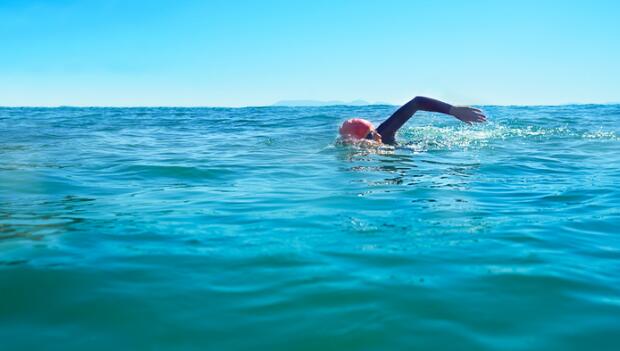
There are many differences between open-water and pool and just because you are a professional pool swimmer, it does not necessarily mean you will be great at open water swimming.
In this article, we will look at some of the main differences between open-water and pool swimming.
We recommend you to read this article carefully so that you understand the key differences between pool and open-water swimming. Read on!
[su_box title=”Air Temperature “]Outside temperature varies and it depends on the conditions and weather –for instance, swimming in strong winds and rain versus a consistent moderate 30-35 degrees of an indoor pool. When manner n the water and air temperatures outside are lower, it can affect your ability to swim in a relaxed.
Likewise, it would be difficult for you to breath, you may feel your arms heavier, and it can also affect your mental concentration. However, when you swim in open water, you will be able to burn more calories than the swimming pool as your body has to work hard in the cold.[/su_box]
[su_box title=”Water temperature”]Swimming in open water also depends on the temperature of the water. For instance, some of the key aspects are what month you swim, the body of water, and the country or geographical location.
For example, throughout Singapore in the sea, on average, the water temperature won’t go beyond 35-40 with the hottest months usually August and early September. In comparison, the average swimming pool temperature at a sports center such as Toa Payoh Swimming Complex is consistent at 25-30 degrees.[/su_box]
[su_box title=”Health benefits”]Scientists have proven that when you immerse in cold water 2-3 times a week will increase the number of white blood cells in your body, which boosts your immune system and fight infections. They activate antibodies as well as improve your metabolic rate.
In some countries, it is a common practice to let children take naps in the cold in an outdoor setting. This has proven to build more resistance in children to diseases. At the same time, they can also sleep deeper and soundly.
Exposure to cold water over time has been shown to improve blood circulation. Coldwater enhances your blood flow to the vital organs of the body. It forces your body to circulate the blood effectively.
Both open water and swimming pool water help limit heat loss – thus regulate body temperature. Swimming can relieve the symptoms of anxiety and depression. Due to high-density receptors for water in the skin, a dip is expected to send an incredible amount of electrical impulses to the brain – resulting in an anti-depression effect.[/su_box]
[su_box title=”Training”]In open water, you can see how far you have swum.
In a swimming pool, you are actually restricted to the length of the pool that can also be sometimes boring swimming from wall to wall.
However, there are some swimming pools in Singapore, for example, Toa Payoh swimming complex that has larger pools, you can easily track your distance in comparison to doing laps in a smaller pool. [/su_box]